Yara Washington · 8 October 2026
Valley Artists Collaborate on Murals Depicting Local History and Environmental Themes
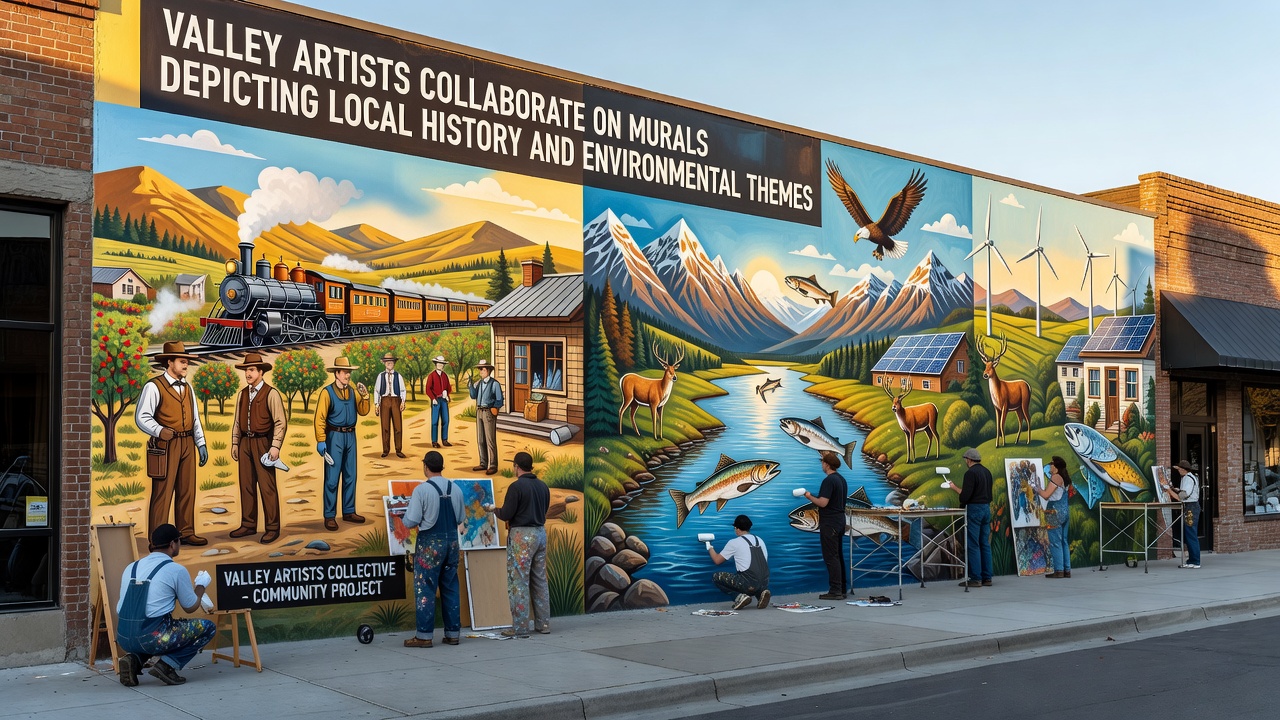
Artists across the valley have joined forces on a series of murals that combine local historical narratives with environmental motifs, and the effort has drawn participation from established studios as well as emerging collectives. The initiative began when several independent creators noticed overlapping interests in preserving regional stories while highlighting shifts in the natural landscape, so they formed working groups that meet weekly to sketch concepts and select wall sites. Data from the valley arts council shows more than forty participants registered by the start of planning sessions, and that number continues to grow as word spreads through community centers and online forums.
Project Origins and Timeline
Planning started in early 2025 after a regional heritage survey identified buildings suitable for large-scale works, and organizers coordinated with property owners to secure permissions that allow public viewing without disrupting daily use. The schedule calls for completion of the first five murals by late summer 2026, while additional panels remain scheduled for an unveiling event planned during October 2026. Observers note that the October timing aligns with local harvest festivals, which typically attract visitors interested in both cultural displays and outdoor activities.
Coordinators divided responsibilities so that one team focuses on archival research while another handles pigment selection and surface preparation, and this division has helped maintain steady progress despite variable weather conditions common in the valley. Figures released by the participating studios indicate that each mural requires approximately three weeks of on-site work once preliminary designs receive approval from the heritage review board.
Historical and Environmental Elements Featured
Murals incorporate scenes from early settlement periods alongside contemporary views of river corridors and forest regrowth, and artists achieve continuity by repeating color palettes that echo native stone and seasonal foliage. One panel depicts a nineteenth-century trading post next to a modern reforestation project, while another illustrates indigenous land-use practices alongside current watershed management techniques. Studies conducted by the valley historical society confirm that these juxtapositions reflect documented changes in both population patterns and vegetation cover over the past century.
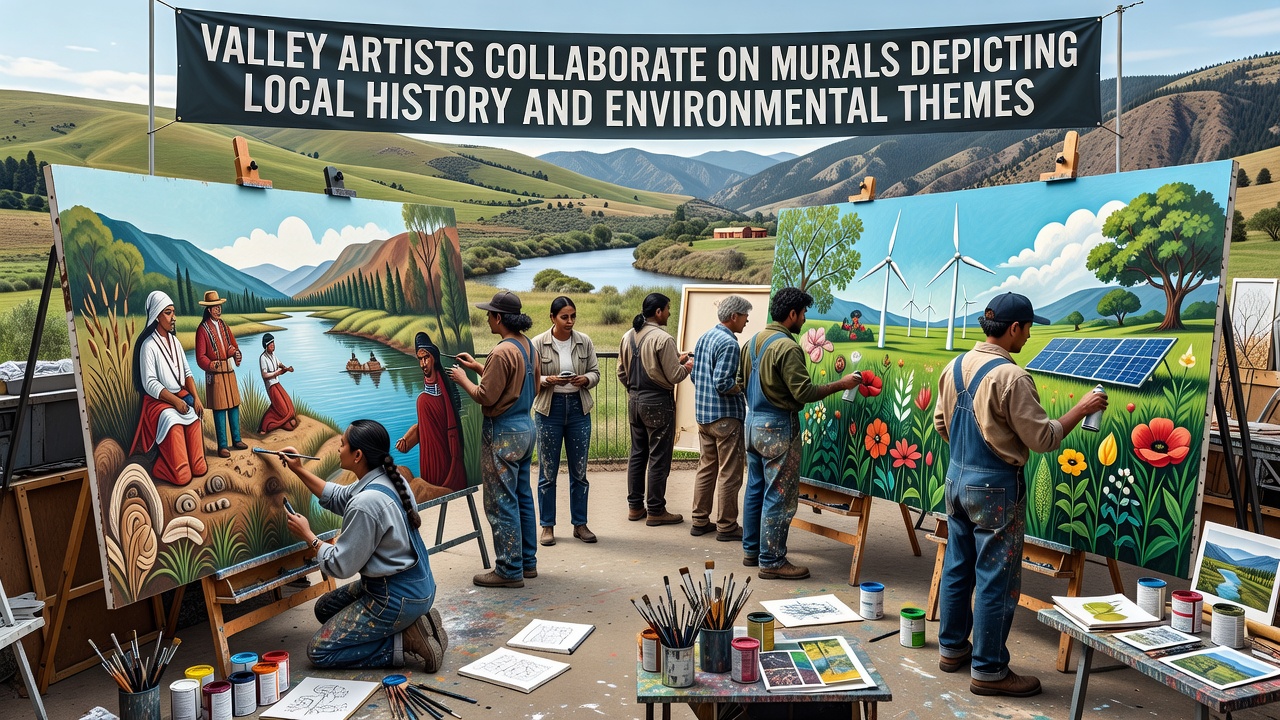
Materials chosen for the works include mineral-based paints rated for ultraviolet resistance, and crews apply protective coatings that extend visibility for at least fifteen years according to manufacturer specifications. Local suppliers provide most of the raw ingredients, which reduces transport emissions and supports businesses already operating within the valley economy. Those involved report that color matching sessions sometimes last several hours because teams compare samples against both archival photographs and live observations of current terrain.
Community Involvement and Logistics
Residents contribute oral histories that inform specific details within the designs, and several schools have incorporated related lesson plans that let students visit active sites during school hours. The valley tourism office lists the murals on its public map, and foot traffic data collected during similar past projects suggests visitor numbers could increase by twenty percent once all panels open. Organizers maintain an open studio schedule on weekends so that passersby can ask questions directly of the artists still at work.
Funding comes from a combination of regional grants and private donations, with the largest single contribution arriving from a foundation focused on cultural preservation. Budget records show that roughly sixty percent of expenditures cover materials and scaffolding, while the remainder supports artist stipends and documentation efforts. The National Endowment for the Arts lists comparable projects in its public database, and those records indicate that multi-year community collaborations of this scale often sustain local engagement beyond the initial installation period.
Technical Approaches and Site Selection
Teams employ projection mapping during the layout phase to ensure proportions remain accurate across irregular wall surfaces, and they adjust designs when unexpected architectural features appear after cleaning. Sites were chosen for visibility from main thoroughfares yet away from areas prone to heavy vehicle traffic, which minimizes both safety concerns and potential damage. Environmental assessments conducted prior to approval confirmed that none of the selected walls contain protected species habitats, and runoff controls remain in place during the painting process itself.
Workshops held at the community center allow participants to test techniques on smaller boards before committing to the final surfaces, and these practice sessions have produced several portable pieces now displayed inside public buildings. The approach reduces material waste and gives newer artists an opportunity to refine their contributions under guidance from more experienced colleagues.
Conclusion
The valley mural project continues to expand as additional walls receive approval and new artists request inclusion, and records kept by the arts council track both participation numbers and public feedback. Completion of the core series remains targeted for October 2026, after which maintenance plans will shift responsibility to local volunteers trained during the original installation. The combined emphasis on historical accuracy and environmental representation has produced a body of work that stands as a record of current conditions while inviting future updates as the valley itself changes.