
Mara Wagner · 10 September 2026
Valley Air Gains Prompt Fresh Approaches to Linking Historical Preservation with Affordable Housing Strategies
Valley air gains have emerged as a catalyst for communities seeking to balance the protection of architectural heritage with the urgent need for affordable living spaces, and data from urban planning agencies shows that improved air quality metrics in several regions since 2024 have accelerated redevelopment projects in older districts. Researchers at institutions tracking environmental improvements note that these gains, often tied to reduced industrial emissions and enhanced green infrastructure, create conditions where vacant historic structures become viable for conversion rather than demolition. According to reports from the National Trust for Historic Preservation, such shifts encourage municipalities to adopt policies that pair tax incentives for preservation with requirements for below-market-rate units in renovated buildings.
Understanding the Connection Between Air Quality Improvements and Urban Redevelopment
Improved air conditions in valley settings have prompted planners to revisit sites long overlooked due to pollution concerns, while studies from government bodies indicate that cleaner environments reduce health risks associated with older building materials like lead paint and asbestos. This development allows for safer rehabilitation efforts that maintain original facades and structural elements, and experts observe that projects now integrate energy-efficient upgrades without compromising historical integrity. Data reveals that regions experiencing measurable air quality advances have seen a 15 to 20 percent uptick in permit applications for mixed-use historic conversions over the past two years.
Local governments respond by updating zoning codes to permit higher densities in preserved areas, yet these changes come with stipulations that a portion of units must remain affordable for specified periods. Observers note that this approach draws from successful models in multiple countries where environmental recovery has aligned with housing goals, and one analysis from Australian heritage agencies highlights how similar air improvements in regional valleys supported adaptive reuse without displacing existing communities.
Strategies for Combining Preservation Standards with Affordability Requirements
Policy frameworks increasingly rely on historic tax credit programs that stack with affordable housing subsidies, and figures from regulatory sources show these layered incentives lower development costs while ensuring long-term rent controls. Planners incorporate guidelines that require retention of character-defining features such as original windows and masonry, while modern additions like insulation and ventilation systems address contemporary living standards. Research indicates that such combined strategies have produced thousands of new units in converted warehouses and schools across North American cities since the early 2020s.
Case Examples from Recent Projects
One redevelopment in a mid-sized valley community converted a 1920s factory complex into 120 apartments, with 40 percent designated as affordable through federal and state funding streams, and project records confirm that air quality monitoring preceded construction to verify safe indoor environments. Another effort in a European context reused a cluster of listed buildings for mixed-income housing, drawing on EU directives that link cultural heritage protection to social equity targets. Those involved report that these initiatives often involve partnerships between preservation nonprofits and housing authorities, resulting in structures that meet both landmark commission reviews and fair housing criteria.
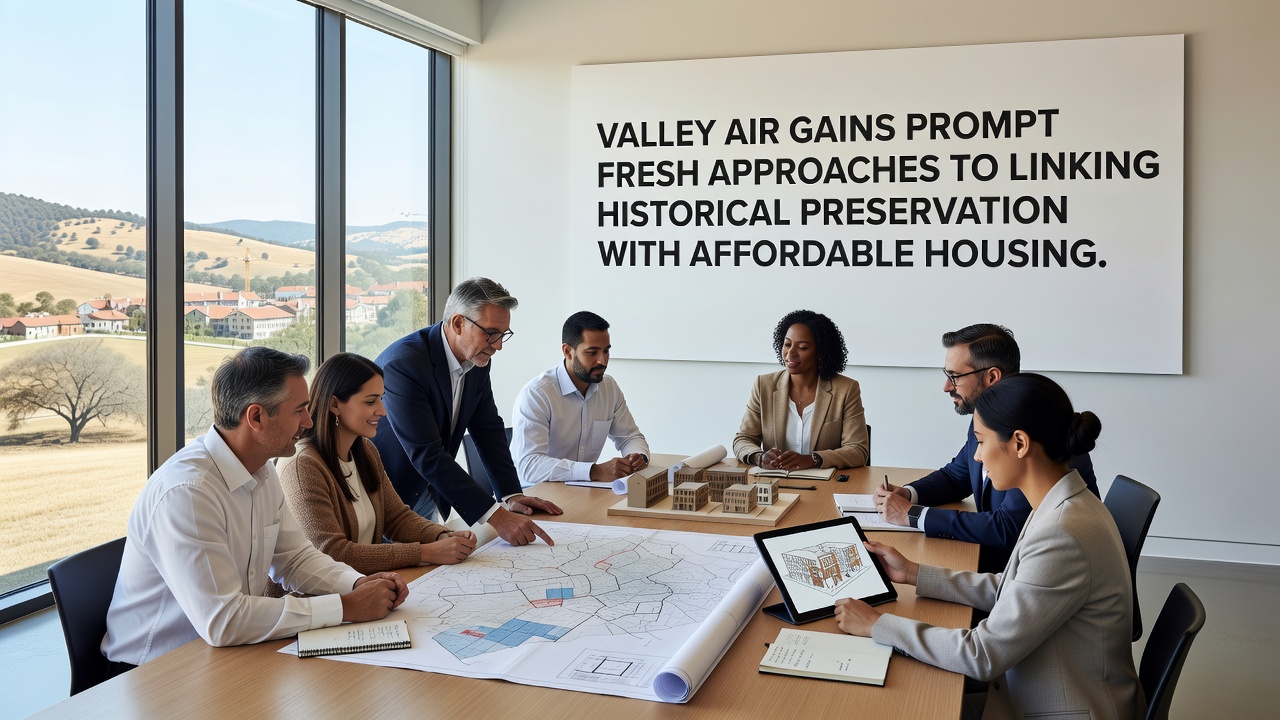
Role of September 2026 Initiatives in Advancing Integrated Planning
Anticipated gatherings scheduled for September 2026, including international forums on sustainable urbanism, are expected to spotlight valley-specific case studies where air gains have directly influenced housing policy, and preliminary agendas list sessions on financing tools that merge preservation grants with rental assistance programs. Data compiled by academic researchers suggests these events will review outcomes from pilot programs launched in 2025, focusing on metrics such as unit affordability duration and energy performance in historic envelopes. Participants from diverse regions plan to exchange approaches that address regulatory hurdles, including variances for seismic retrofits in older structures paired with density bonuses.
Evidence from ongoing tracking shows that communities leveraging these air quality improvements have reduced sprawl by concentrating growth in established neighborhoods, and this pattern aligns with broader goals outlined in national housing strategies from multiple jurisdictions. What's notable is the emphasis on community input processes that incorporate resident feedback on design elements to ensure new affordable units respect local heritage narratives.
Challenges and Measured Outcomes in Implementation
Coordination between historic review boards and housing finance agencies presents logistical demands, yet successful examples demonstrate that early collaboration streamlines approvals and cuts timelines. Reports indicate variability in outcomes based on local market conditions, with stronger results in areas where air gains coincide with job growth that supports mixed-income occupancy. One study from a Canadian research institute found that preserved buildings adapted for affordability maintained higher occupancy rates compared to new construction in similar price brackets, attributing this to the distinctive character that attracts residents.
Funding mechanisms continue to evolve, incorporating performance-based allocations that reward projects achieving both preservation benchmarks and affordability thresholds, and this method encourages innovation in materials and techniques that respect original construction methods. Observers point to the expansion of these models as air quality data becomes more granular through sensor networks deployed in valley corridors.
Conclusion
Valley air gains have opened pathways for linking historical preservation efforts with affordable housing development through coordinated policies and incentive structures, and ongoing data collection will clarify long-term impacts on community stability and environmental metrics. Resources from organizations such as the National Park Service tax incentives program and heritage bodies in other regions provide frameworks that communities adapt to local conditions. As September 2026 approaches, further documentation of these integrated strategies will inform refinements that sustain both cultural assets and accessible housing options.